SURREY’S SEASON
Finishing sixth in the County Championship might seem little to get excited about but for Surrey in 1985 it was a remarkable effort.
Why? They had been staring at a disaster in the opening weeks of the season as bowler after bowler went down injured, a trend which continued for much of the summer. A finish among the prize money would have been distinctly possible had they won any of their final six matches, standing third in mid-August.
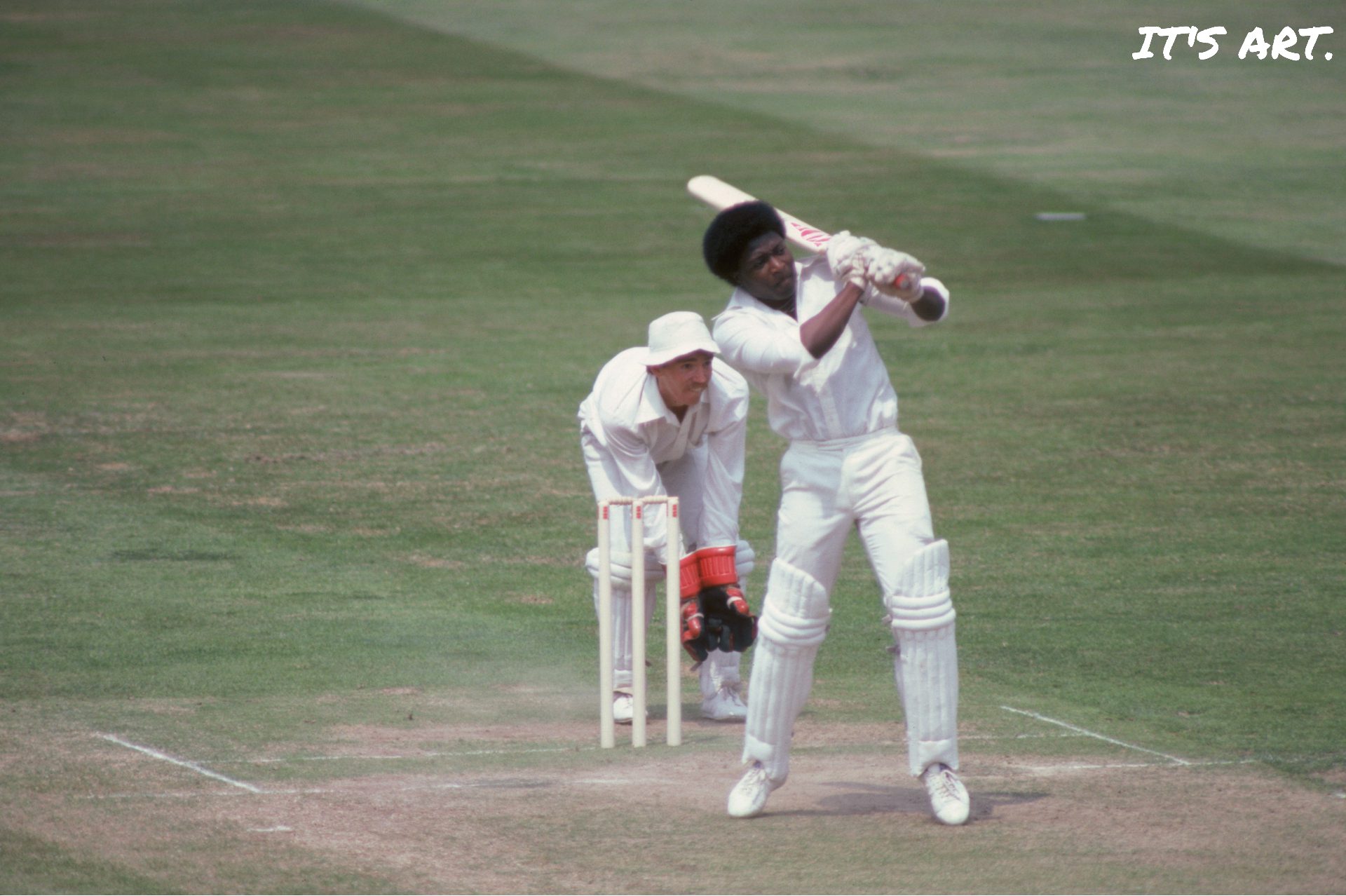
That all looked far-fetched in the spring. Promising all-rounder Mark Feltham broke his leg in a car crash in Durban, shortly before he was due to return home from a winter playing there. And the news from South Africa got a great deal worse when Sylvester Clarke, spearhead since his arrival in 1979 and feared by many opponents – especially on the fast pitches prepared by Harry Brind on the relaid square at The Oval – suffered a back injury which required surgery and put him out for the season.
Resources were getting thinner by the moment when Kevin Mackintosh decided that a back injury suffered two years earlier would not allow him to carry on and in late May the reliable Graham Monkhouse suffered a broken hand while batting against Middlesex, meaning another long lay-off.
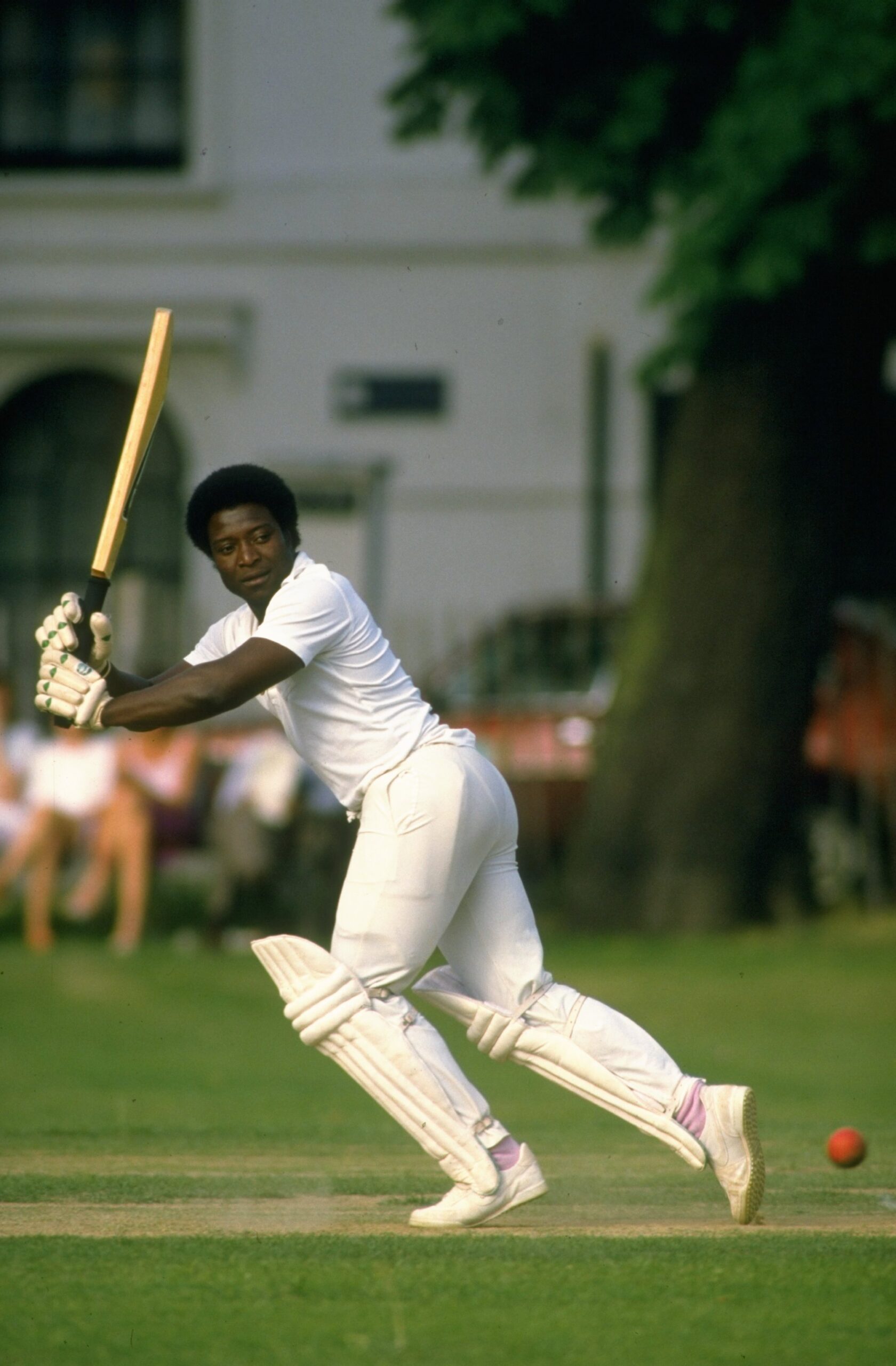
Surrey had expected a disrupted start to the campaign anyway, skipper Geoff Howarth missing the opening weeks while captaining New Zealand in West Indies. That was turned to an advantage when Alf Gover – the club’s former fast bowler who was now a world-famous coach – recommended little-known Trinidadian speedster Tony Gray. Howarth agreed with Gover’s estimation but there was a catch. Regulations aimed at slimming down overseas players from two per county to one meant that while Howarth and Clarke (both registered in 1978 or before) could play together, Gray’s arrival would preclude the Kiwi from taking his place on the field.
Manager Micky Stewart commended Howarth for his selflessness in backing the move, although it proved a sad final season to the New Zealander’s 15 years with Surrey, his powers clearly on the wane but his leadership much respected. His appearances were restricted to first-class friendlies against Cambridge University and Zimbabwe.
Pat Pocock had already agreed to lead the side in the opening stages, Surrey failing to qualify for the Benson & Hedges Cup quarter-finals and losing their opening Championship match as Glamorgan won by seven wickets.
Routing Lancashire for 77 at The Oval earned the first win of the season and although Gray’s arrival in late May could not prevent defeat to Warwickshire by four wickets at Edgbaston, a rain-hit bank holiday encounter with Essex at The Oval saw the hosts storm home by seven wickets as centuries from Grahame Clinton and new signing Trevor Jesty took advantage of Keith Fletcher’s uncharacteristically generous declaration.
Jesty had arrived from Hampshire and Surrey supporters were able to enjoy his silky strokeplay, although taking over from Pocock as acting captain affected his form for a period. He was integral to a top six which ensured the side were hard to beat in the Championship, even if the restricted attack had its limitations. Leading the way was Monte Lynch, whose 1,672 runs at 55 included seven centuries, two of them against champions Middlesex, while his prehensile reflexes yielded 36 catches close in.
Clinton – in between his usual toll of trips to hospital – returned 1,255 in 18 games at the top of the order, where his partnership with beneficiary Alan Butcher (1,335) proved invaluable. Jesty overcame his form slump to finish with 1,062 while Andy Needham (1,032) was another solid presence, sometimes deputising at the top of the order and proving a useful back-up spinner to Pocock. In his first full season, Alec Stewart passed 1,000 runs in all first-class games, wicketkeeper Jack Richards (665 at 44) continuing his progress with the bat and leading the fielding effort.
Gray quickly proved a substantial ind, offering pace and hostility, nowhere more so than against Yorkshire at Sheffield where his 8-40 in the first innings and two more in the second led the way to winning by nine wickets. It was just as well. Clarke’s speed partner David Thomas, still regarded as an England possible, had been the main focus of the attack early on but suffered a groin injury in late June which ended his season. Surrey signed the former Gloucestershire all-rounder Richard Doughty, whose 31 wickets in 10 games did much to support Gray while Duncan Pauline – generally regarded as a top-order bat – proved a useful medium-pacer, his 15 victims including castling both Clive Lloyd and Viv Richards.
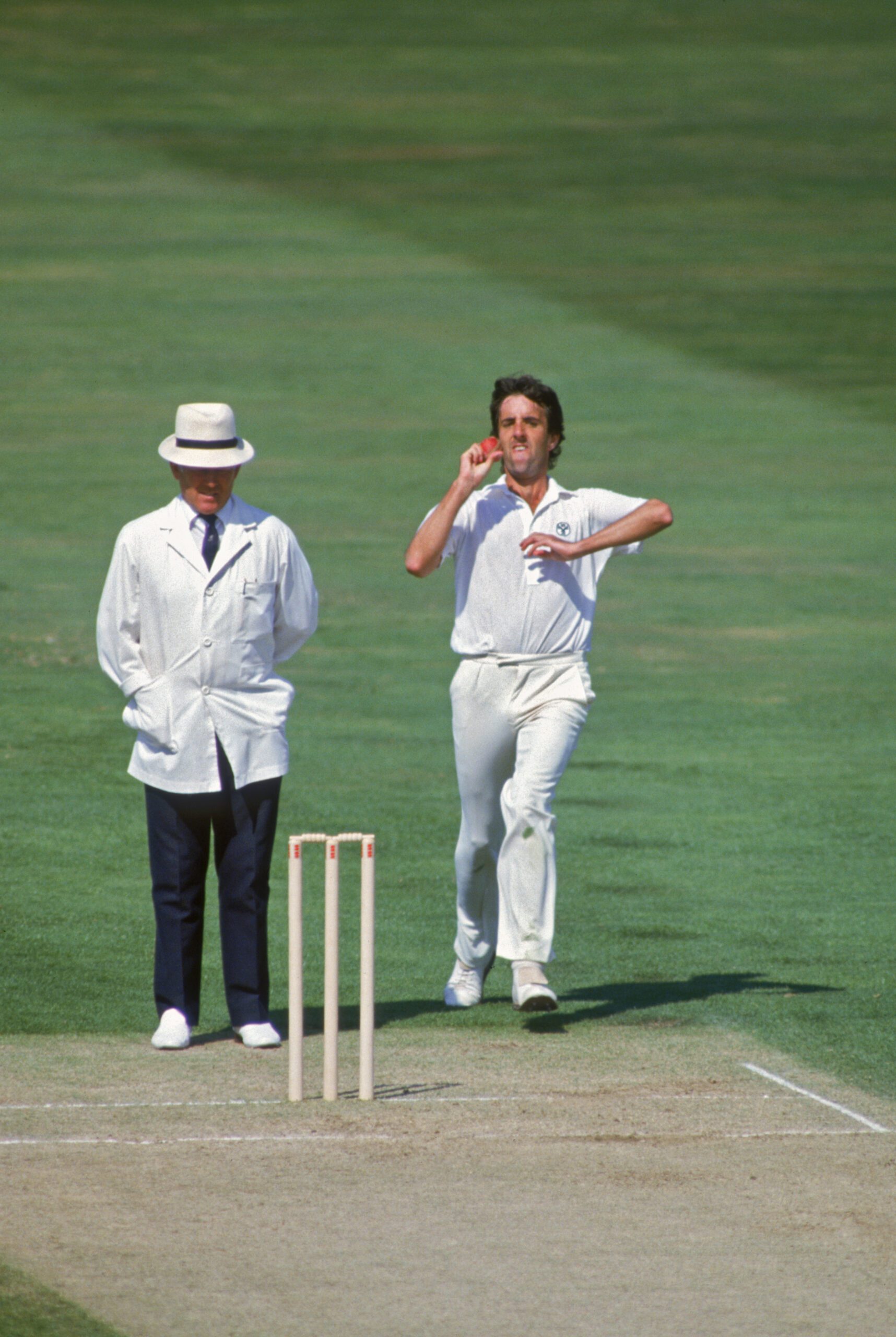
Pocock, who had played a leading part in England’s winter triumph in India, found few pitches to suit him in a damp summer, a devastating 7-42 against Kent at The Oval the highlight of his 47 at 34.
If Surrey could regard sixth place in the Championship as a worthwhile finish – a rise on their eighth position of the last two years – the limitations of the attack were exposed in limited overs matches. That early exit from the B&H was matched by losing to Kent in the NatWest Trophy second round at Canterbury, failing to defend the 293 from 60 overs which owed so much to Clinton’s 146 against his old county. And those shortcomings were even more brutally exposed on Sundays, where they finished bottom of the John Player League.
Gray’s 79 Championship wickets saw him presented with his county cap, alongside Needham and Stewart, but it was left to Stewart snr in the club yearbook to reflect that “I felt I had spent more time with players in physiotherapists’ treatment rooms, Harley Street specialists’ addresses and hospital wards than I had spent seeing them on cricket grounds”.
It was little wonder that the designs for the Ken Barrington Centre – which was expected to be built at the Vauxhall End rather than it’s final home next to the pavilion – included a treatment room as fundraising passed the £1million mark.
OVAL TEST
Living up to the Botham’s Ashes series of four years earlier was all but impossible, yet when the series came to The Oval for the sixth and final Test there was plenty of excitement.
England were 2-1 up, ensuring echoes of 1926 and 1953 as crowds descended on the ground intent on seeing the urn regained.
It was all very different from a year earlier, when West Indies had whitewashed the hosts 5-0. David Gower’s men had fought back from losing the opening Test in India to win 2-1 and were much strengthened by the return of Ian Botham, having taken the winter off.
They could also welcome back Graham Gooch and John Emburey, free from three-year bans for touring South Africa with a rebel side. Australia, by contrast, were still recovering from the triple retirement of Greg Chappell, Dennis Lillee and Rod Marsh, their captain Kim Hughes having resigned in tears the previous winter and several prospective tourists unavailable because of another rebel tour to South Africa. Their batting depended unhealthily on new skipper Alan Border.
England won the opening Test at Headingley by five wickets, Border’s magnificent 196 the backbone of a four-wicket victory which levelled the series at Lord’s. Bat heavily dominated ball in next two matches at Trent Bridge and Old Trafford – the latter saved by Border again with 146no – but Australia finally cracked at Edgbaston. Their 335 had taken until early on the third day, thanks to rain, but Gower – who had entered the series in miserable form and then hit a rich vein – cruised to 215 along with centuries from Tim Robinson and Mike Gatting which took England to 595-5dec. Richard Ellison followed his 6-77 in the first innings, having been recalled, with four more as the match was wrapped up by an innings and 118 runs despite more weather interruptions.
Australia badly needed some luck going into the final match but lost the toss on a prime surface and although Craig McDermott, carrying much of the attack despite being only 20, bowled the prolific Robinson for three, it would be England’s day. Gower needed some good fortune in the first hour but was soon unveiling a series of dreamy strokes while Gooch, so far having a modest series while others cashed in, found his old certainty. They had 100 up by lunch and utterly dominated the bowling in a partnership of 351 for the second wicket. Gower finally departed for 157, deservedly to McDermott, after taking his personal tally to 732 for the series. Although Gatting (4) fell soon after, England appeared to have all but regained the Ashes when they finished the first day at 376-3.
Next morning the match took an unexpected turn, Gooch missing his double-century by four runs with a low return catch to McDermott – his first and only chance – and the rest dramatically following as England lost their last six wickets for 61 to be bowled out for 464. McDermott and Geoff Lawson, who had struggled for full fitness all summer, both finished with four wickets.
Any satisfaction felt by Australia was short-lived. Botham, displaying a consistent pace many felt beyond him now, trapped Graeme Wood leg-before and persuaded his opening partner Andrew Hilditch to hook down long leg’s throat for the third time in the series.
By the close they had slumped to 145-6, Border (38) playing on to left-arm spinner Phil Edmonds and the innings only staggering on to 241 all out on Saturday morning because Greig Ritchie (64no) got stuck in for 95 minutes. Botham could not be kept out of the match for long, an outstanding overhead catch to remove Lawson supplementing three wickets before Australia were asked to follow on.
They might have surrendered inside three days but for rain rubbing out most of the afternoon, returning at 12-0 with 105 minutes to see out.
Botham soon had Wood for a second time and Hilditch, so intent on abstaining from the hook, instead drove straight to extra cover. Lurching to 62-4 by the close, they had the rest day to dwell on what promised to be a tumultuous defeat.
A fourth full house of the match witnessed just that on the Monday morning, just 96 minutes being required to finish them off. Border’s departure for 58 saw the Australian captain given a standing ovation on his way off, Botham pouching the catch plus another brilliant snatch to remove McDermott, while Ellison underlined his importance by finishing with 5-46. It was Les Taylor, in his second and final Test, who had the last word by taking a return catch from Murray Bennett to finish off the tourists for 129 to complete victory by an innings and 94 runs.
Gower enjoyed the adulation of the crowd – his luck would soon turn again in West Indies the following winter – while Border accepted defeat gracefully while plotting the supremacy his side would relish on their next visit four years later.
WHAT ELSE HAPPENED IN 1985?
The miners strike ended in March after 12 bitter months, called in an attempt to prevent the closure of uneconomic pits.
The United Kingdom signed the Anglo-Irish Agreement with the Republic of Ireland, giving the latter an advisory role in Northern Ireland’s governance for the first time. It was designed to bring an end to The Troubles, although that would take more than a decade to happen.
Prime Minister Margaret Thatcher’s Conservative government suffered mid-term wobbles while Labour leader Neil Kinnock – elected after their meltdown in the 1983 general election – took on his party’s Militant Tendency, telling their conference at Bournemouth that “you can’t play politics with people’s jobs and with people’s services or with their homes”.
Ronald Reagan was sworn in for his second term as president of the United States of America, following his overwhelming victory late in 1984 over former Democrat vice-president Walter Mondale.
Mikhail Gorbachev was the new general secretary of the Soviet Union’s Communist Party – de facto leader – and had met in Geneva with Reagan, whose great ally Thatcher had already announced: “I like Mr Gorbachev. I think we can do business together.”
The Live Aid concert at Wembley Stadium, followed by another in Philadelphia, raised more than £50m for famine relief in Ethiopa, building on the success of Band Aid’s Do They Know it’s Christmas the previous year.
Spain reopened the border with Gibraltar for the first time since General Franco had closed it in 1969.
EastEnders, the soap opera based in the fictional London suburb, made its debut on BBC1.
Roger Moore made his seventh and final appearance as James Bond in A View to a Kill.