It was the year Surrey reached their first limited overs final, John Edrich made a Test triple century, New Zealand and South Africa toured in a new-look international summer and so much else. Richard Spiller spotlights the summer of 1965…
Surrey’s season
Every season starts on a note of optimism, sometimes realistic and others requiring a leap in faith.
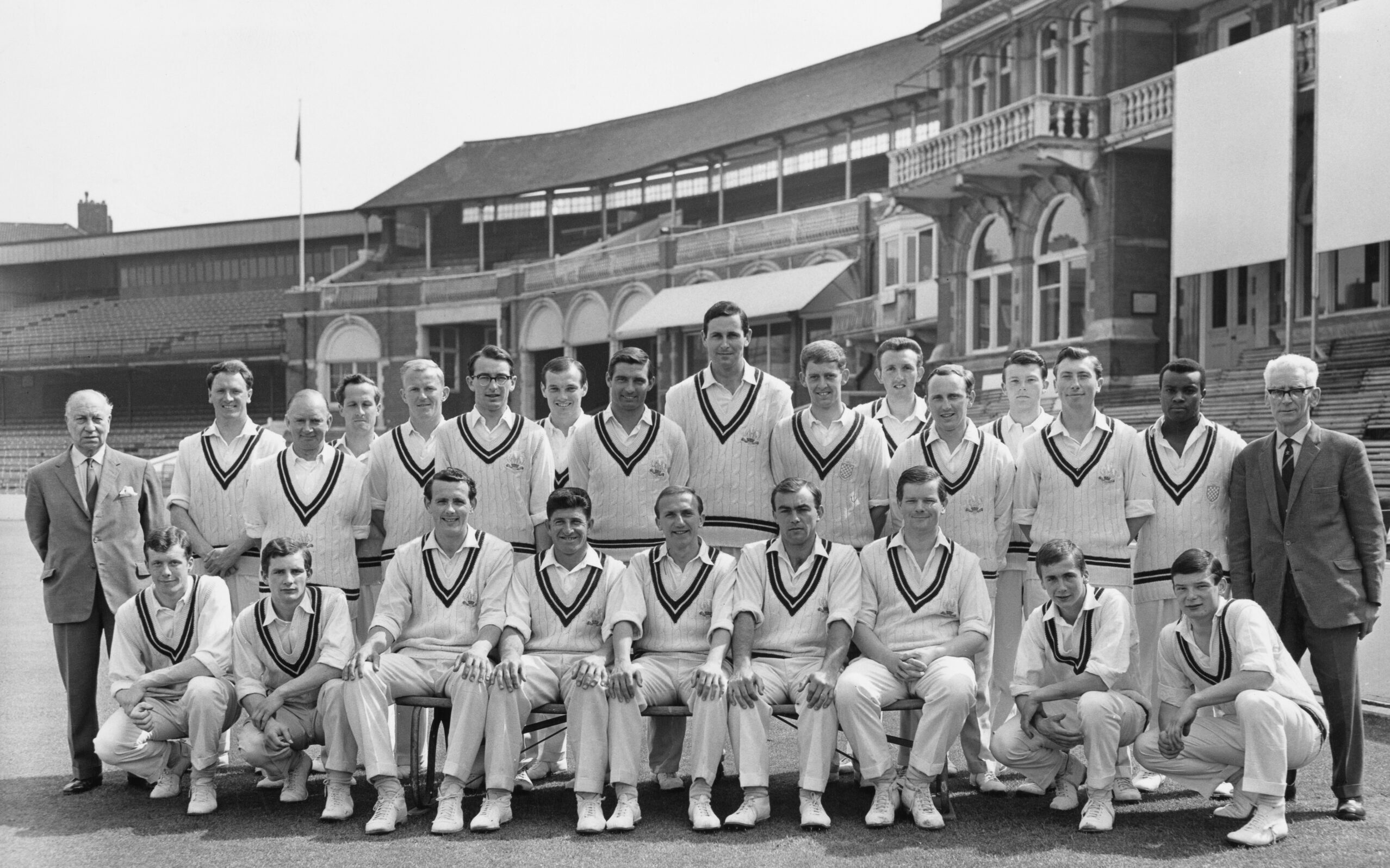
Surrey went into 1965 with every reason to be hopeful, though. The rebuilding of the team after the glorious 1950s – when seven straight County Championships were won – was making progress and fourth place had been achieved in 1964.
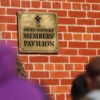
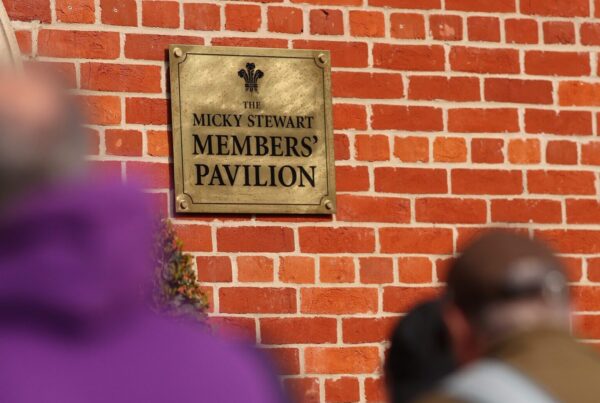
That had represented a rise of seven places and Micky Stewart, in his third season as captain after succeeding Peter May, could believe better times were coming again.
Yet by the start of July, it was all looking pretty grim. Surrey failed to win any of their first 11 Championship matches, losing two and drawing the rest, and it was not until July 2 that the first victory came, winning by an innings and 134 runs at Northampton and promptly following it with a three-wicket victory over Yorkshire at Bradford.
It did not presage a sprint up the table – there were four more stalemates before Gloucestershire were beaten by 188 runs at The Oval and then another three until Middlesex at Lord’s and Somerset at Weston-Super-Mare were overcome.
Results were at least more clear cut in the final stages, wins over Derbyshire at Chesterfield and Leicestershire at Grace Road mixed with reverses against champions Worcestershire at New Road and Glamorgan at Swansea.
In the end, Surrey had to settle for eighth place, 15 of their 28 outings drawn.
Young pacer Geoff Arnold led the bowling with 74 wickets at 17, David Sydenham’s 57 costing 19 apiece while Stewart Storey claimed 51 at 70. The outstanding all-round contribution came from David Gibson, whose 70 wickets and 925 runs marked the high-water mark of a career too often punctuated by injuries.
Left-arm spinner Roger Harman’s haul dropped from 136 to 63, off-spinner Pat Pocock taking 20.
Surrey’s outstanding batter was John Edrich, scoring 1,513 at 47, returning to the England side after missing out on the winter tour to South Africa by making a remarkable triple-century against New Zealand at Headingley. His summer did not go entirely smoothly, though, suffering a nasty blow to the head from South African pacer Peter Pollock at Lord’s.
It was a mixed season for Ken Barrington too, the bedrock of both his county’s and country’s batting. He made 137 in the opening Test against New Zealand at Edgbaston – a match in which conditions were so cold that the players were served coffee at drinks intervals – but it took seven-and-a-quarter hours. That it was easily the highest score of the match and formed the basis for England’s victory by nine wickets did not save Barrington from condemnation and he was dropped for the next match, returning with another century – alongside Edrich’s mammoth contribution – at Headingley two games later.
For Surrey, his returns were untypically modest, scoring just 608 runs at 22. Stewart was the epitome of consistency, scoring 1,349 Championship runs and taking 32 – sometimes breathtaking – catches, a number equalled by all-rounder Stewart Storey (868 runs and 51 wickets) while wicketkeeper Arnold Long collected 56 catches and six stumpings in his neat manner.
What brightened Surrey’s summer was a run to the final of the Gillette Cup. Having departed in the first round when the competition started in 1963, they had reached the last four a year later and their passage to Lord’s was eased by all three matches being at home. Glamorgan were seen off by five wickets before beating Northamptonshire by five wickets. That set-up a semi-final against Middlesex, whose 220-8 in their 60 overs was overhauled by five wickets with 4.5 overs in hand thanks to Edrich (71), Barrington (68no), and Mike Edwards (53no).
That earned a date with Yorkshire at Lord’s on Saturday, September 4, although the match was threatened by rain throughout the day before. Equipment from The Oval helped to dry the outfield so that the match was delayed by only 90 minutes.
It remained 60 overs per side and Stewart inserted his opponents only to find his bowlers struggling to stand up in the slippery conditions.
They contained Yorkshire early on but were undone by a superb 146 from Geoffrey Boycott, who had suffered an indifferent season and failed to register a first-class century. But now – with the encouragement of skipper Brian Close at the other end – he unveiled an array of strokes which few believed he possessed.
The pair added 192 for the second wicket, Close making 79, while John Hampshire’s 38no later drove his side to a new record score in the competition of 317-4. Only Storey, who conceded just 33 in his 13 overs, and Arnold (1-51) escaped serious punishment.
Any hopes Surrey possessed of challenging that total swiftly disappeared when Fred Trueman removed Edrich, Bill Smith and Barrington in four deliveries to leave them 27-3, Ron Tindall making 57, but the innings tailing off at 142 all out to leave Yorkshire winners by a massive 175 runs.
Surrey would have to wait another nine years before enjoying success in a Lord’s cup final.

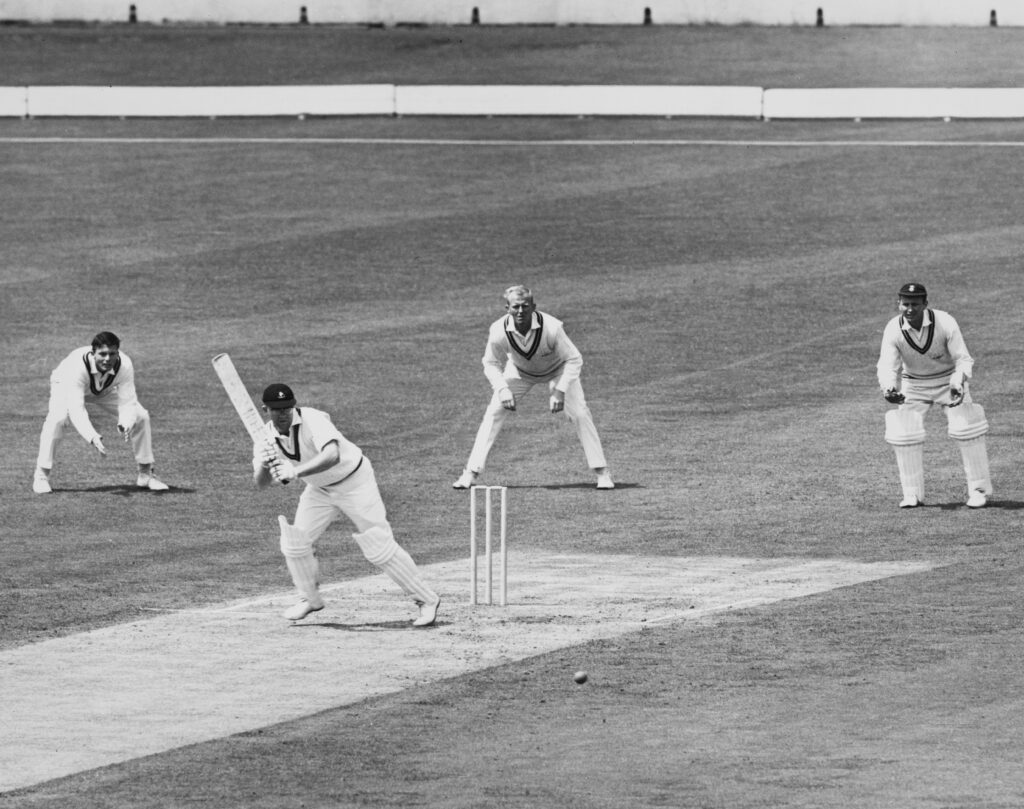
Oval Test
Not since 1912 had more than one country formed the opposition for England but the increasingly busy nature of the international programme – relative of course to the present day, when limited overs and T20 series crowd in – meant improvisation was required.
New Zealand were seen off in a 3-0 whitewash by Mike Smith’s side before South Africa arrived for the second half of the summer. Their all-white team attracted controversy, South Africa having already been forced to withdraw from the Imperial (now International) Cricket Conference in 1961 and soon being suspended from the Olympics. But as England’s second longest-running opponents, after Australia, the relationship between the two cricket establishments ran deep and the Anti Apartheid Movement had not grown in influence and organisation in the way it would to block the 1970 tour.
As a team, Peter van der Merwe’s side had much to recommend it, their attack led by the hostile Peter Pollock and batting featuring his elegant brother Graeme. Colin Bland’s magnificent fielding was on show in the opening Test at Lord’s, a tense draw in which the hosts just hung on, being underlined by two direct hit run outs.
The Pollocks dominated their 94-run victory in the second Test, at Trent Bridge, Graeme’s superb 125 in the first innings matched by Peter’s 10 wickets in the match.
Coming to The Oval, England recalled Brian Statham after two years to lead the attack, in what would prove his final international appearance, matching him with Lancashire colleague Ken Higgs.
They dominated the early stages, Statham’s 5-40 from 24.2 overs a reminder of his wonderful accuracy and debutant Higgs claiming 4-47 in 24. South Africa owed Tiger Lance’s 59 for lifting them to 208 and its value was underlined when the home side were bowled out for 202, which was only reached thanks to Colin Cowdrey (58) and Jim Parks making 42 as Peter Pollock added five more wickets to his tally.
Ali Bacher (70) and Bland (127) put the tourists in control on day three, Lance making 53 and England’s chances of a series-equalling victory were reduced by missing two catches in the latter stages of the innings, which ran to 392 all out. Higgs (4-96) completed a fine first outing as England were left seven hours to make 399 but their second innings was a huge improvement. Middlesex pair Eric Russell (70) and Peter Parfitt added 99 for the second wicket while Barrington (73) and Cowdrey (78no) gave England a realistic chance by putting on 135.
But with 91 needed in 70 minutes, rain arrived to wash out the finale and end not only the match and series but matches between the sides until 1994.
Barrington and Edrich were included in the England squad which flew to Australia for the first time, rather than the long boat trip, as they attempted to win back the Ashes.

What else happened in 1965?
Sir Winston Churchill, Britain’s inspirational leader in the Second World War, died aged 90. His state funeral at St Paul’s Cathedral was attended by Queen Elizabeth II and representatives of 112 countries. Prime Minister from 1940-45 and 1951-55, he was born at Blenheim Palace and buried at the family plot in Bladon overlooking it.
Churchill had only stepped down an MP the year before at an election won by Harold Wilson’s Labour party, ending 13 years in opposition. Defeated Conservative PM Alec Douglas-Home introduced elections for his party’s leadership and declined to stand again, being succeeded by Edward Heath.
Lyndon Johnson was sworn in for a full term as president of the USA, having succeeded the assassinated John Kennedy in 1963 and easily defeating Republican candidate Barry Goldwater in the following year’s election. His administration soon became bogged down in the Vietnam War, to which America had been committed by Kennedy. Johnson also signed the Voting Rights Act, outlawing practices which had disenfranchised many African Americans.
In the UK, the Race Relations Act made it an offence to discriminate against people on the grounds of colour, race, ethnicity or nationality.
It was a transformational year for car drivers. New standard road signage was introduced, as were the 70mph maximum speed limit and blood-alcohol limit for getting behind the wheel.
Capital punishment for murder was suspended five years, a step towards abolishing it completely.
The minority white government of Rhodesia – later Zimbabwe – unilaterally declared independence, despite the efforts of Wilson to negotiate.
Pizza Express opened their first branch in London, as did Kentucky Fried Chicken in Preston.
Stanley Matthews played his final Division One match, aged 50, and was awarded a knighthood for his services to football.
Manchester United won the Division One title, Liverpool claiming the FA Cup for the first time in their history – beating Leeds United at Wembley – while West Ham became the second British club to claim a European trophy when they defeated 1860 Munich in the Cup Winners Cup final. Keith Peacock of Charlton Athletic became the first substitute used in the Football League.
Wales won rugby union’s Five Nations Championship, winning three out of four matches.
Australians dominated the All England Tennis Championships at Wimbledon, Roy Emerson defeating compatriot Fred Stolle 6-2 6-4 6-4 in the men’s singles while John Newcombe and Tony Roche did likewise in the doubles, beating Ken Fletcher and Bob Hewitt 7-5 6-3 6-4.
Margaret Smith maintained that monopoly in the women’s singles, overcoming Maria Bueno 6-4 7-5. Brazilian Bueno teamed up with America’s Billie Jean King to defeat French pair Francoise Durr and Janine Lieffrig 6-2 7-5 in the doubles.
Australia had another success to celebrate in golf’s Open Championship at Royal Birkdale, Peter Thomson taking the claret jug for the fifth time by finishing two shots ahead of Brian Huggett and Christy O’Connor snr.
Scot Jim Clark won the Formula One World Driving Championship.