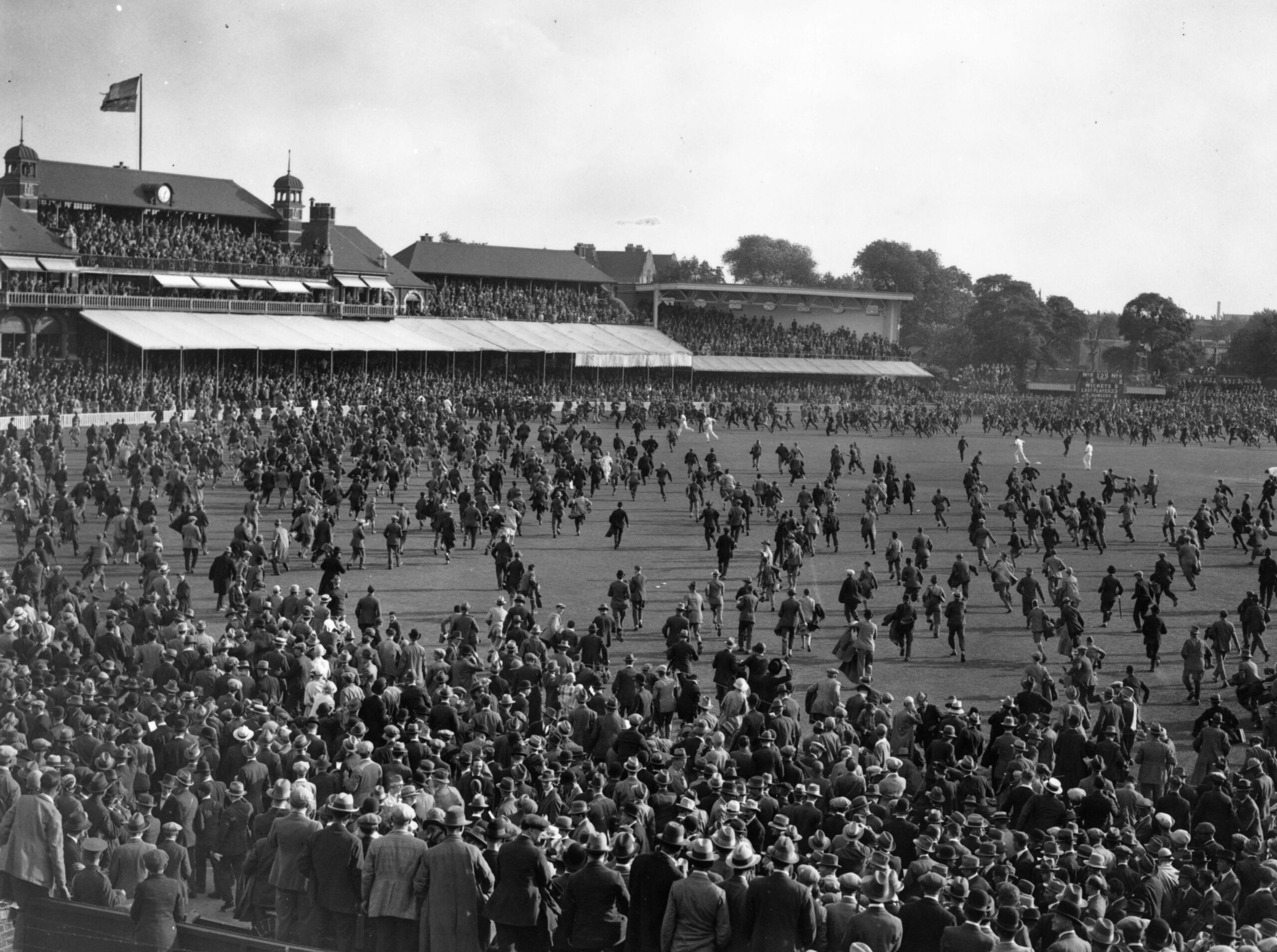
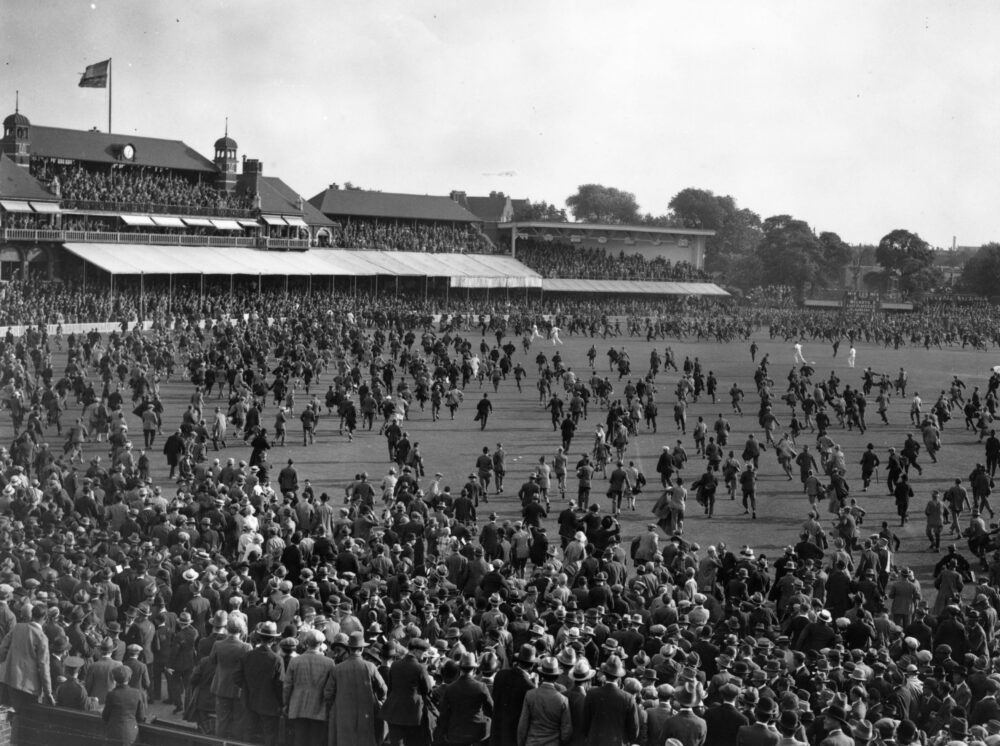
It was a year of immense turmoil around the country yet great joy for England as they won back the Ashes with victory at The Oval – and the birth of a future monarch. Richard Spiller looks back a century to 1926.
Surrey’s season
Runners-up the previous summer, could Surrey go better and win their first County Championship title for 12 years?
Yorkshire, winners for the previous three seasons, were the team to beat but it would be Lancashire who topped them in a desperately tight race to launch their own hat-trick. The Roses pair were to prove dominant between the wars, Yorkshire winning 12 times and Lancashire five with only Middlesex (twice), Nottinghamshire and Derbyshire breaking their monopoly.
Surrey started well enough, two early draws against Hampshire and Glamorgan – plus one against the touring Australians – followed by innings victories over Gloucestershire and Essex. But a 92-run reverse against Sussex at The Oval began a run of eight games without success, losing three of them.
And although that run was finally ended in mid-June when they beat Somerset by 77 runs on home soil, there were just two more successes in the next two months amid a heavy reverse against Yorkshire at Bramall Lane plus a welter of draws. But the campaign finished on a bright note for Percy Fender’s side, beating Leicestershire by 119 runs in the final home match.
Then it was off to Lord’s to take on Middlesex, where Jack Hobbs made an unbeaten 316 – the highest score of his career – as Surrey amassed 579-5dec, Douglas Jardine’s 103 the next best. Despite Patsy Hendren’s 101no, the hosts were bowled out for 275 and followed on to be bowled out for 241, losing by an innings and 63 runs.
That ensured Surrey finished fifth, their seven wins and four draws outweighed by stalemates. Bowling teams out twice at The Oval was a challenge frequently beyond them – or opponents – thanks to Bosser Martin and his “pet”. It was a massive heavy roller that squeezed the life out of pitches, which made taking 20 wickets in any match a herculean task despite the inventiveness of Fender. He was acknowledged as the most astute captain in the country, but irritated the powerbrokers of the game frequently enough to ensure that they never put him in charge of the Test side.
The limitations of Surrey’s attack made that task harder, seamer Alan Peach (70 wickets) their main thrust with the new ball but much depending on Fender, whose mixture of leg-spin and medium-pace earned him 90 wickets. He was assisted by fellow leg-spinner Stanley Fenley, who finished with 86 victims in a season which proved the highlight of his short career.
Fenley had taken 84 wickets in 1924, his first season, and then turned professional, his hauls of five wickets or more including a match-winning bag of 8-69 in that early victory over Glamorgan.
He became less effective in the following summers, a bout of double pneumonia in 1929 effectively ending his time at Surrey, although there would be one appearance for Hampshire the following year.
Although Hobbs and his opening partner Andy Sandham could not emulate their feats of passing 2,000 Championship runs in 1925, they often gave Surrey a solid base by making 1,560 and 1,258 respectively and there was plenty of backing. Tom Shepherd’s 1,347 (plus 30 wickets bowling medium-pace) was joined by Andy Ducat’s 1,245 while Jardine (1.050), Fender (830) and Alf Jeacocke (850) ensured runs were rarely in short supply.


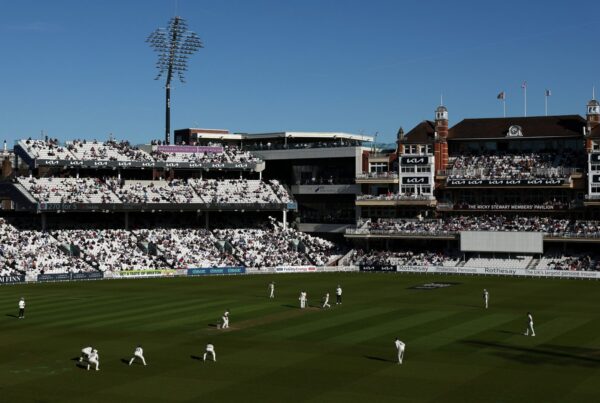
Oval Test
There was enormous excitement around the country when the Ashes finale came to The Oval. Australia had dominated since the restart of Test cricket following the First World War, achieving their first whitewash when England travelled down under in 1920-21 and following it with a 3-0 victory in the following northern hemisphere summer. They were heavy victors as well back on home soil in the 1924-25 series, but this time it was different.
The opening match had been almost completely wiped out by rain, both teams having their moments of supremacy during draws at Lord’s, Headingley and Old Trafford. Herbie Collins returned from injury to lead Australia at The Oval but England took a more radical approach with four changes. Percy Chapman replaced Arthur Carr as captain while the pace of young speedster Harold Larwood was combined with seamer George Geary. The biggest surprise was the recall after five years of Yorkshire’s left-arm spinner Wilfred Rhodes, approaching his 49th birthday, at a ground where he had been a central figure in one of the great Ashes dramas 24 years earlier, adding 15 for the last wicket with George Hirst to claim victory.
There might have been a fifth alteration had Hampshire’s George Brown, chosen to replace Herbert Strudwick, not injured a finger – perhaps paying the price for keeping in his motorcycle gauntlets – so the Surrey wicketkeeper was reprieved and would play a key role. It would prove to be the last of Strudwick’s 28 Tests, retiring a year later after a career which yielded 1,493 dismissals, a record which remained until 1975.
Despite making a solid start led by Herbert Sutcliffe’s 76, careless batting by England threw away their advantage on the opening day to be bowled out for 280, leg-spinner Arthur Mailey benefiting most to claim 6-138 from 33.5 overs.
Two wickets for Larwood pinned back the tourists to 60-4 by the close, only for Collins (61) and Jack Gregory (73) to lead a revival, help from wicketkeeper Bert Oldfield (33no) and Clarrie Grimmett (35) enabling them to take a lead of 22.
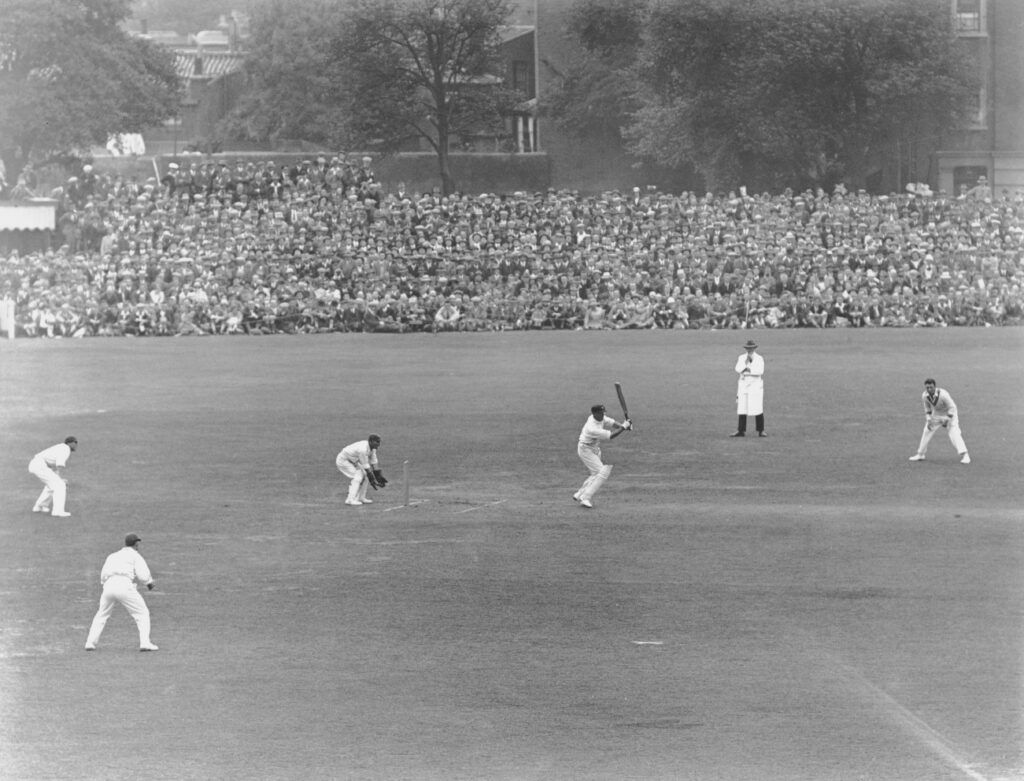
England were 49-0 by the close, but a thunderstorm in the evening spelt danger. Initially, the pitch was too wet the next morning to help Mailey, fellow leg-spinner Grimmett or off-spinner Arthur Richardson. But it became increasingly difficult as it dried and needed all the skill of Hobbs and Sutcliffe – whose reputation as one of England’s best opening partnerships was sealed on this third day – to prevent the rest of the order being exposed.
Hobbs’s place among the greats was already secure, the 43-year-old having passed WG Grace’s record of 126 first-class centuries the previous summer – in which he made 3,024 runs including 16 tons – but now he led the way in dealing with balls jumping at him, particularly from Richardson.
“I have never seen Hobbs show himself a greater batsman than he did on Tuesday and Sutcliffe was equally great,” wrote Sir Pelham Warner in The Cricketer magazine.
Hobbs reached 100 – out of 172 – to acclaim from the crowd before being bowled by Gregory, leaving Sutcliffe to go on and make 161 as conditions eased, Maurice Tate’s 33no on the fourth morning lifting England to 436 all out.
Needing 415 and with the pitch freshened again by a shower, Australia never looked like making the 415 required as Larwood added 3-34 to his trio of victims earlier on and Rhodes showed his mastery of flight in claiming 4-44. They were bowled out for 125 and the Ashes had been recovered.
What else happened in 1926?
A state of emergency – which ran from April 30 to December 2 – was declared by Prime Minister Stanley Baldwin as the threat of widescale industrial action deepened. Miners, whose wages were being cut by the owners, went on strike the following day and would stay out in an increasingly bitter dispute until late November. But they were joined for nine days in May by Great Britain’s first – and so far only – general strike, called by the Trades Union Congress and supported by around 1.5 million workers. With newspapers among those industries affected, the BBC broadcast five bulletins a day while Chancellor of the Exchequer Winston Churchill oversaw a government publication, the British Gazette.
The Duke & Duchess of York welcomed their first child, Princess Elizabeth. When her uncle, Edward XIII, abdicated in 1936, her father became King George VI and that meant Elizabeth was now heir to the throne. She became Queen in 1952, a reign which lasted 70 years.
Josef Stalin tightened his hold on power in the Soviet Union by removing rivals Leon Trotsky and Lev Kamenev from the politburo of the Communist Party.
John Logie Baird, the driving force of early broadcasting, gave a demonstration of the first television pictures for members of the Royal Society and a reporter from The Times.
Winnie the Pooh, written by AA Milne, was published for the first time.
The inaugural British grand prix was staged at the Brooklands circuit in Surrey.
American Gertrude Ederle became the first woman to swim the English Channel.
Huddersfield Town won the Football League Championship for the third season running under manager Percy Chapman, finishing five points ahead of Arsenal. Bolton Wanderers beat Manchester City 1-0 in the FA Cup final.
Scotland finished top of rugby’s Five Nations Championship, just ahead of Ireland on points difference.
Jean Borotra, the “bounding basque” won the men’s singles at Wimbledon for the second time in three years, beating American Howard Kinsey 8-6 6-1 6-3. The women’s singles saw Briton Kitty Godfree also repeating her 1924 triumph, overcoming Spain’s Lili de Alvarez 6-2 4-6 6-3.
Golf’s British Open Championship at Lytham & St Anne’s brought a first claret jug for American Bobby Jones, amateur finishing three shots ahead of American professional Al Watrous.