As the dying embers of the 2026 season fade away, we’re already looking forward to next summer, when the centrepiece will be The Ashes.
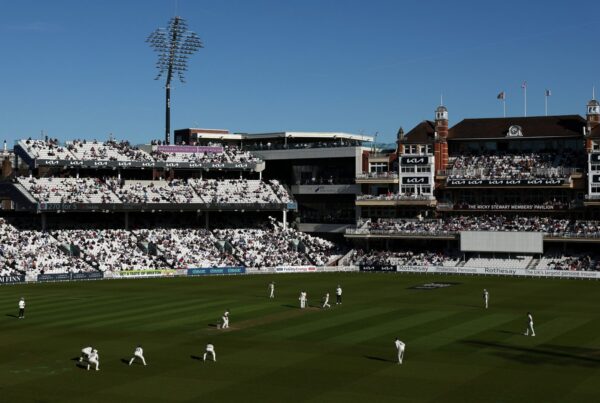
In traditional fashion, the Kia Oval will be staging the final game of the five-match series with England hoping to recapture the urn after nearly 10 years. Joe Root’s side can be encouraged that the hosts have won more times at The Oval than any other English ground, 18 out of 39 games finishing in triumph with 14 draws and seven defeats.
Running simultaneously, the multi-format Women’s Ashes will be running with a T20 coming to Kennington on Tuesday July 6.
Richard Spiller looks back at some of England’s most famous wins in the modern era
1968
Scoring a Test century on your home ground – particularly against Australia – is a career highlight for any player. Yet John Edrich’s 164 in the 1968 Test at The Oval is often forgotten amid all the drama and recriminations surrounding this most extraordinary match, which aroused worldwide controversy and intense political fallout.
Just as in the two previous home Ashes series (1961 and 1964), Australia had already retained the urn by the time the series reached its finale, despite the tourists often looking second-best. Wisden labelled them “perhaps one of the most disappointing” of the 25 squads to have visited these shores by then.
Yet they went ahead in the opening match at Old Trafford, winning by 159 runs and were saved by rain at Lord’s after following on.
Skipper Colin Cowdrey’s century in his 100th Test dominated the match at Edgbaston when England were on top again but both he and opposite number had to sit out the Headingley match with injuries, where another draw ensured Australia again retained The Ashes.
So was The Oval an anti-climax? Not a bit of it.
Edrich’s 103no ensured England batted through the opening day as his side reached 272-4, joining the likes of Walter Read, Tom Hayward, Jack Hobbs (twice) and Ken Barrington in the ranks of Surrey players who had achieved the feat on home turf. Only Mark Ramprakash (2001) and Kevin Pietersen (2011) have achieved it since.
Edrich went on to 164 on the second day but then D’Oliveira took centre stage, making the 158 which took the hosts to a commanding 494 all out and ensuring his name would forever be linked with one of the great controversies regarding sporting links with South Africa, where he had been born and brought up but prevented from playing international cricket by their apartheid laws.
Despite Lawry’s typically staunch 135, Australia conceded a sizeable deficit after being dismissed for 324, speedsters John Snow and David Brown claiming three wickets apiece.
England took just three hours to muster 181 all out in their second innings, on the fourth day, despite the best efforts of Alan Connolly (4-65), and then grabbed two quick wickets – Lawry and Ian Redpath – which left the tourists in trouble at 13-2 going into the final day.
They were in even greater strife at 85-5 just before lunch when an enormous storm hit the ground, quickly leaving it under water. Even the reappearance of the sun soon after seemed too late to rescue England’s hopes of securing the victory which had eluded them all summer.
A picture of England captain Colin Cowdrey gazing forlornly at the puddles appeared to sum up the hopelessness of the situation.
But Oval groundsman Ted Warn believed the situation was retrievable, persuading Cowdrey, and spectators were inveigled to help out, using spikes, forks and whatever else they could use being pressed into action.
The game was finally restarted with 75 minutes remaining, Australia resisting firmly until D’Oliveira finally removed Barry Jarman. Cowdrey immediately recalled Derek Underwood, his left–arm spinner who nicknamed “Deadly” for his effectiveness in such conditions.
Surrounded by every fielder possible amid a sea of sawdust, the rest folded in 27 deliveries with opener John Inverarity who had battled away for four hours to make 56 – leg-before shouldering arms with a maximum of two overs remaining.
Underwood finished with 7-50 and Cowdrey had his victory by 226 runs, D’Oliveira’s selection – after being initially omitted – prompting the tour to be cancelled and South Africa’s isolation to grow.
1985
When the Australians came in 1985, The Ashes were still alive by the time the series reached the sixth and final match The Oval and comparisons were being made with 1926 and 1953.
That England had not sealed the series before then had as much to do with rain as the opposition, winning the opener at Headingley, then losing at Lord’s and being frustrated at both Trent Bridge and Old Trafford by the weather – Australian skipper Allan Border scoring two centuries – before having just enough time at Edgbaston to go in front.
Searching for his best form through the first five Tests, Graham Gooch – back from a three-year ban for touring South Africa – now batted with massive assurance for 196 after David Gower won the toss and batted first on a true and pacy pitch. The captain needed some fortune early on in his 157 but the pair ending any hopes Border still nurtured of keeping the Ashes in a scintillating second wicket partnership worth 351.
Ending the first day at 376-3, the hosts were hurried out on the second morning for 464 by new ball pair Geoff Lawson (4-101) and Craig McDermott (4-108).
Yet it proved more than enough. Ian Botham’s powers might have been on the wane but the sight of him still seemed to get Australian knees buckling – maybe it was the blonde highlights – and he developed a party piece of persuading opener Andrew Hilditch to hook down long leg’s throat.
Australia were dismissed for 241 just after lunch on the third day and only a lengthy rain delay prevented their capitulation being delayed until Monday morning. Border’s typically fighting 58 was ended by an edge to Botham off Richard Ellison – whose 5-46 took him to 17 wickets in the final two Tests, a key difference – and gained him a standing ovation as he walked off.
The tourists were dismissed for 129, crushed by an innings and 94 runs, sealed by Murray Bennett spooning a return catch to seamer Les Taylor. It was the last contribution that either player made to Test cricket.
1997
The 90s were a grim decade for England in the Ashes, Australia having won them back in 1989 and keeping them until 2005.
But the hosts won both their encounters at The Oval, going deep into the final hour – having entered the match 4-0 down – in 1993. Four years later came a wholly different affair, all done in three days of a match described by Wisden as “a contest fit to rank with the great games in Ashes history”.
Australia had retained the urn again, arriving 3-1 up in Kennington, and ostensibly the happier of the teams after dismissing England – who had chosen to bat first – for 180.
Alec Stewart’s 36 on his home ground was the best score with Nasser Hussain making 35, the innings going into sharp decline from 128-3 against the precision of Australia’s spearhead Glenn McGrath (7-76).
At 94-2 early on the second day, there seemed only one winner but left-arm spinner Phil Tufnell, given his first outing of the summer, made the most of a pitch which had started to crumble on day one by working his way through a star-studded line-up. His victims included skipper Mark Taylor (38), Greg Blewett (47) and Ricky Ponting (40) to finish with 7-40, only Shane Warne’s aggressive 30 at the end earning the tourists a lead of 40.
Could England make the most of this unexpected opportunity? It seemed unlikely when they slumped to 52-4 only for a crucial fifth wicket partnership worth 79 between Graham Thorpe (62) and Mark Ramprakash, recalled for the match and underlining his ability to pick Warne – hampered by a groin strain – in stroking a measured 48.
The rest were swept away by seamer Michael Kasprowicz, whose 7-36 made him the third bowler to claim seven wickets in the game, the first time it had happened in a Test.
Australia now needed 124 for victory, Devon Malcolm immediately removing Matthew Elliott for what was to prove his final Test wicket. Tufnell enjoyed the sharp turn available to claim another four wickets, finishing with 11 wickets in the match, and in tandem with Andrew Caddick gave England hope. At 88-5 it still seemed Australia’s game but Tufnell trapped Ponting in front for 20 and the rest fell for 16 runs with Caddick (5-42) sweeping through the tail for victory to be secured by just 19 runs in front of a full-throated crowd when McGrath was pouched by Thorpe at mid-off.

2009
Regaining the Ashes after such a long gap in 2005 was capped by a draw at The Oval. But four years later, having been whitewashed down under in 2006-07, they needed a victory to grab them again as the series stood at 1-1.
The match was given added spice by Andrew Flintoff announcing it would be his final Test because of a chronically bad knee but he was deemed fit for his farewell and joined by new boy Jonathan Trott, called in to strengthen a suspect batting order.
The first England player to make his debut in an Ashes decider since 1896, he was to play a crucial part although it was Warwickshire colleague Ian Bell who top-scored in the first innings by making 72 after Strauss had won the toss. England, though, appeared to throw away the advantage as they slipped from 176-2 to 332 all out despite Trott’s 41 and Stuart Broad crunching 37.
Australia had, strangely, failed to pick a specialist spinner – relying on Marcus North – and their media was in uproar when puffs of dust came up on day one. Yet it was fast bowler Peter Siddle (4-75) who proved their most effective bowler and now, after openers Shane Watson (34) and Simon Katich (50) began the reply by adding 73 before an hour was lost to rain around lunchtime, another quickie who destroyed them.
Stuart Broad was the fifth bowler tried by Strauss, his spell from the Vauxhall End earning four wickets in his first five overs, the follow-on threatening at 111-7 and only Siddle’s determined 26no driving the visitors up to 160 all out, still a long way behind. Broad’s 5-37 founded his reputation for magic spells, off-spinner Graeme Swann’s 4-38 supporting perfectly.
Now England slid to 39-3, Strauss’s 75 standing firm and Trott dominating the rest of the innings in the manner which was to make him a bulwark of the batting for the next four years, clipping anything near his pads through the onside and punishing infractions of length on his way to an accomplished 119.
Flintoff was given a hero’s reception on and off the pitch for his last brief innings of 22, one of four victims for North in his 30 overs as Australia reflected on their poor selection.
Swann hammered 63 merrily before England declared at 373-9 with 21 overs plus two days remaining. But the pitch which some had promised would crumble remained docile when Australia set out to save the game or make 546 to win – a score far in excess of any achieved in the past.
This time Watson (40) and Katich (43) provided a platform of 86, then Ponting – desperate to avoid a second Ashes defeat in charge – added 127 in tandem with Michael Hussey, Australia beginning to worry their opponents and a packed fourth day crowd by reaching 217-2 shortly after lunch.
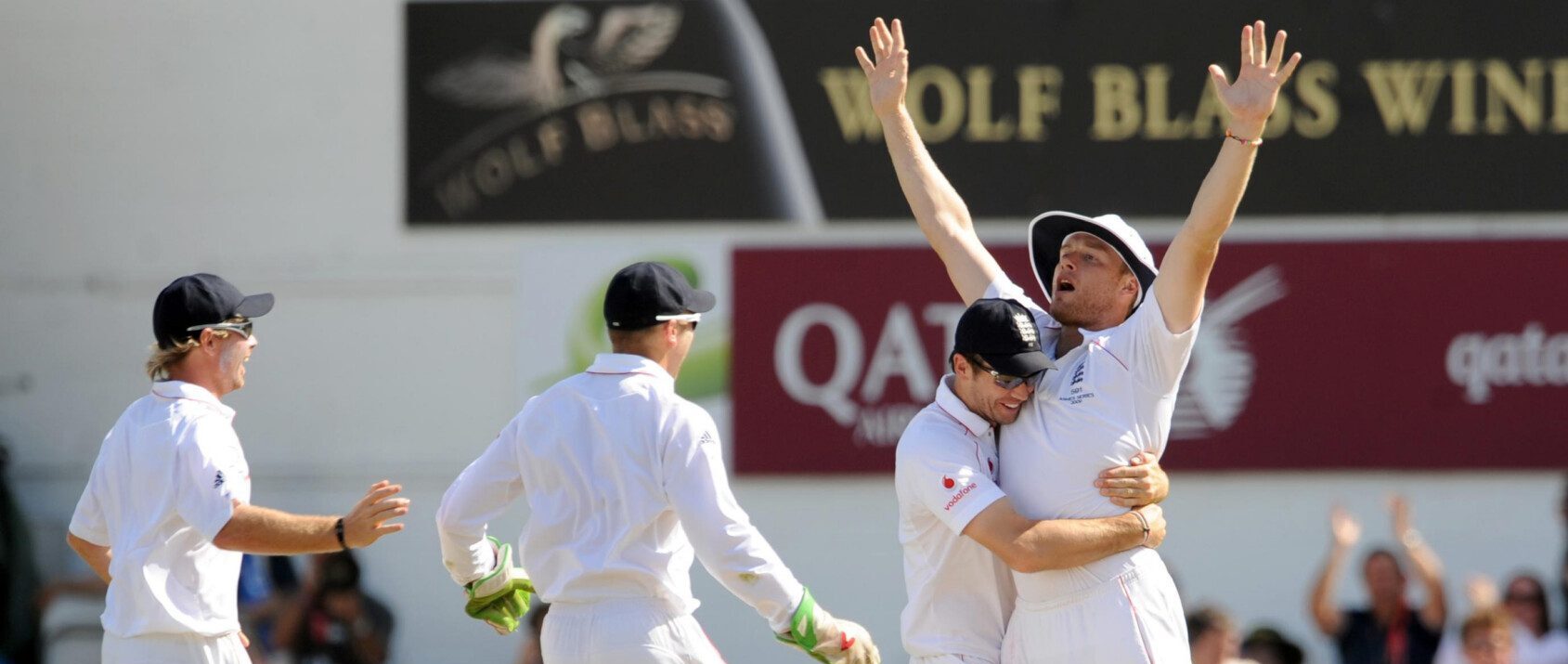
The breakthrough came in stunning style, Hussey pushing to mid-off and Flintoff, in his last major intervention, spearing a throw which just beat Ponting and sent him back for 66.
Hussey fought hard, also securing his place after a modest series, while Brad Haddin (34) helped add 91 for the sixth wicket. Yet once he holed out to Strauss at deep midwicket, the match slid away. Steve Harmison, barely used in what was to prove his final Test, made a triple breakthrough with the new ball.
The honour of wrapping up the series and regaining The Ashes fell to Swann (4-120), having Hussey snapped up at short-leg for 121 as England won by 197 runs and the urn swapped hands again.

2023
The Bazball revolution was in full spate when Australia arrived in 2023 but it had not gone to plan. England lost the first two Tests and despite winning at Headingley, rain at Old Trafford ensured the tourists got out of a tight squeeze and retained the urn again.
Skipper Ben Stokes was determined to go out on a high, though, seeing Harry Brook’s typically cavalier dominate a first innings of 283 after being sent in with Mitchell Starc claiming 4-82.
Steve Smith’s 71 put Australia on top at 115-2, Chris Woakes taking 3-61 to pin back the visitors who took a slender lead of 12 thanks to skipper Pat Cummins (36) and Todd Murphy (34) adding 49 for the ninth wicket.
England had much to do if they were to level the series but opener Zak Crawley (73), Joe Root (91) and Jonny Bairstow (78) combined to elevate England to 395 all out, Starc and off-spinner Murphy both collecting four wickets.
The drama was increased by Stuart Broad announcing it would be his final Test, his hopes of going out on a triumphant note reduced when openers David Warner (60) and Usman Khawaja put on 140 of the 384 needed.
And they were still in charge while Smith (54) and Travis Head (43) were well set in putting on 95 for the third wicket. But a dramatic collapse of four wickets for 11 in 19 balls changed the complexion of the match, Woakes (4-50) and Moeen Ali (3-76) drilling through the batting. Broad was determined to have the final word, having first Murphy and then Alex Carey caught behind to earn England victory by 49 runs.

Women’s Ashes 2023
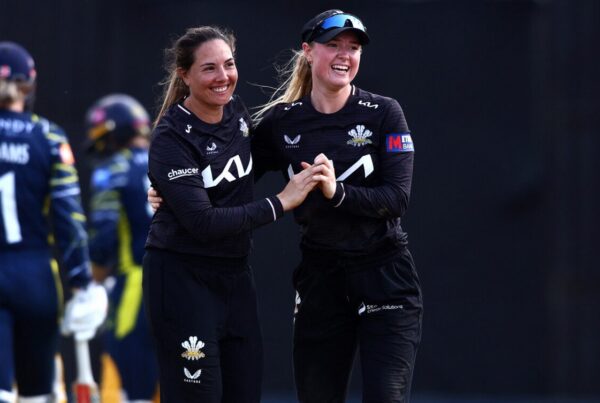
If the series four years ago is anything to go by, spectators will be in for a treat next summer, especially if England can produce the sort of comeback we saw in 2023.
The hosts were down in the dumps after a draw in the Test, at Nottingham, was followed by four-wicket defeat in the first T20 at Edgbaston.
But at the Kia Oval there was a resilient display by England as opener Danni Wyatt-Hodge’s 76 led them to 186-9, given invaluable assistance by Sophia Dunkley (23), Nat Sciver-Brunt (23) and then – following a clatter of wickets – Sophie Ecclestone’s 22 down the order.
Alyssa Healy (37) and Beth Mooney (22) got the reply off to a bright start and after that the main obstacle was Ellyse Perry, whose 51 almost won the game for her side but England’s spinners held their nerve to eke out victory by three runs in front of a crowd of more than 20,000.
England went on to win the third T20 and then the first ODI but another ripping match – won by three runs – kept the urn for Australia, which meant defeat in the final clash did not matter.