Half a century ago, amid the backdrop of crisis both domestically and internationally, Surrey were runners-up in the County Championship. Richard Spiller looks back at the eventful campaign.
Surrey’s season
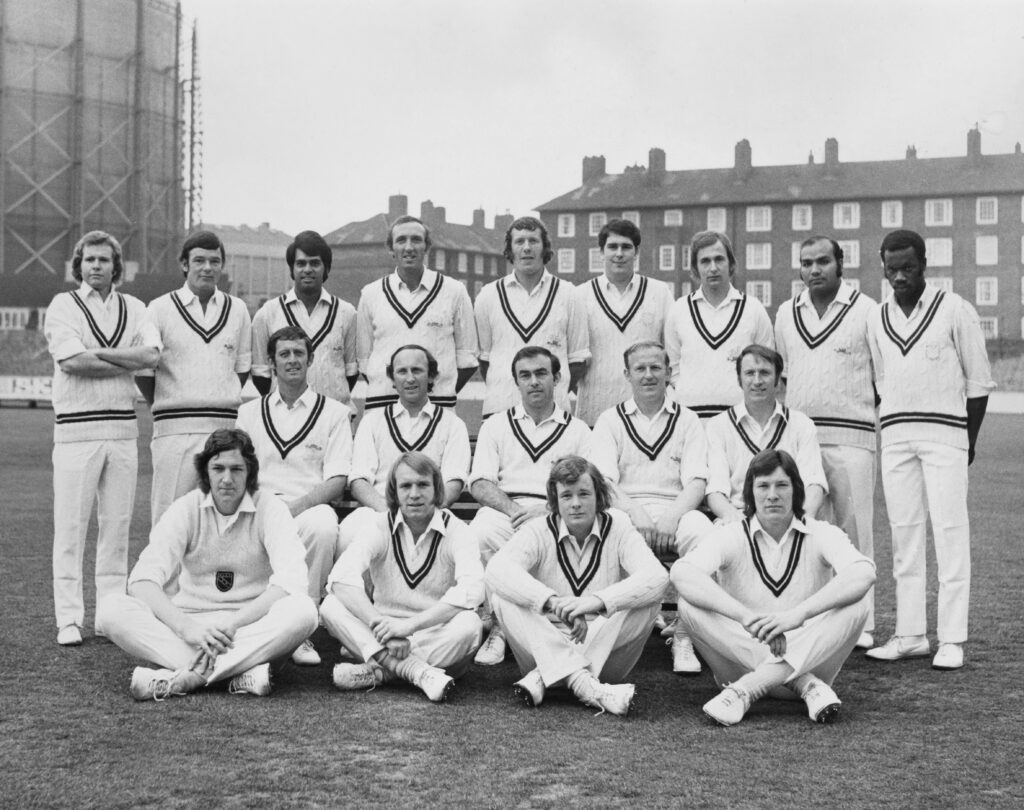
Surrey had a new captain in John Edrich after Micky Stewart ended a 10-year tenure in charge – which had brought the County Championship title in 1971 – by retiring from the first-class game.
Edrich had suffered a thin series against Australia the previous summer and was ignored throughout the 1973 season by the selectors, although they would return to him a year later. Surrey’s alarming slump in form, finishing 12th in 1972, showed few signs of ending in the early stages of the campaign and they sat 13th in mid-June. They had lost their first two Championship matches – against Essex and Gloucestershire at The Oval, by seven and eight wickets respectively – while six draws and another reverse followed before champions Warwickshire were overcome by three wickets.
That sparked an astonishing revival, Yorkshire then being sent packing by an innings and 165 runs. Nine of the last 11 matches were won, including the last six, to pinch the runners-up spot although Hampshire were still 29 points in front as they took the title for the second time in their history.
If anything, that only served to paper over some alarming cracks. Surrey had failed to qualify for the Benson & Hedges Cup quarter-finals, finished ninth in the John Player League and were dumped out of the Gillette Cup by Gloucestershire in the second round.
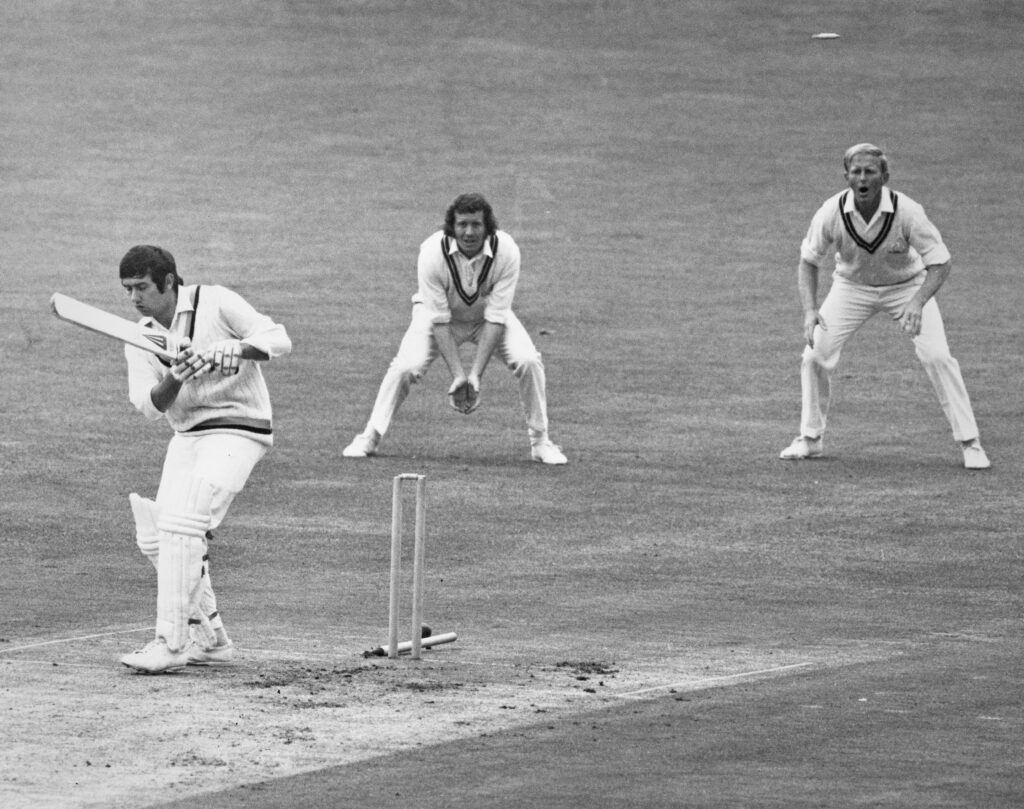
Misgivings about Edrich’s captaincy credentials were rarely far from the surface yet the late run of wins had secured his job. His uncharacteristically modest form brought 904 Championship runs at 33, Surrey’s major source being fellow left-hander Younis Ahmed as he stroked 1,389 at 53. Graham Roope’s 791 at 52 might have been more but for making four Test appearances that summer and too often the side had to rely on rescue efforts down the order from Robin Jackman, who hit 509 at 39.
In the absence of Geoff Arnold – the mainstay of England’s attack for all six Tests, reducing his county haul to 23 – Jackman claimed 82 wickets at 20, backed up by off-spinner Pat Pocock (62 at 25) and leg-spinner Intikhab Alam (72 at 26).
Surrey’s runners-up spot netted them £2,000 in prize money, a club which had been close to going bust two years earlier being grateful for any assistance, not least as their plans to redevelop The Oval were being frustrated.
Oval Test
England’s 158-run defeat by West Indies signalled the ending of one era and the start of another.
Raymond Illingworth had enjoyed much success since assuming the captaincy – originally as a stop-gap for the injured Colin Cowdrey – in 1969, which included winning back the Ashes in 1970-71 and retaining them in 1972. But now his outfit were creaking, edging past New Zealand in the first half of the summer but then coming up against West Indies.
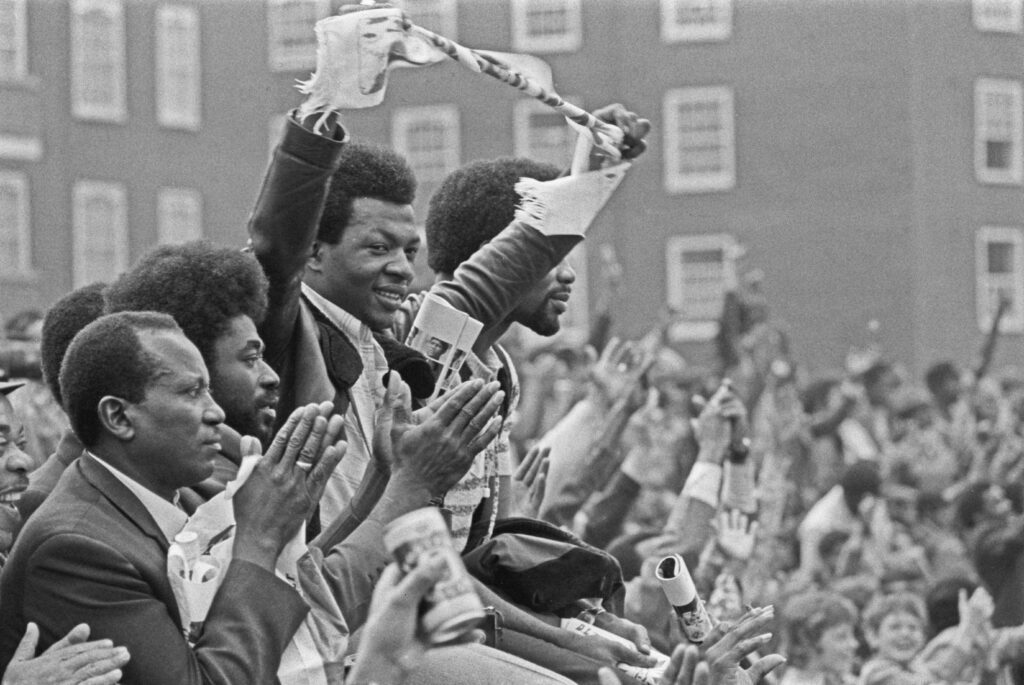
They had not beaten England since 1966, nor won a Test against anyone else since 1969. Yet under Rohan Kanhai they arrived with a powerful combination who were rich in knowledge of English conditions, given 10 of the 11 taking the field at The Oval had associations with counties.
Kanhai chose to bat first but his side were struggling at 64-3, a commanding fourth wicket alliance worth 208 between Clive Lloyd (132) and Alvin Kallicharran (80) reversing the tide. Both fell to Surrey’s Geoff Arnold, who claimed 5-113 from 39 overs, but Keith Boyce’s typically fierce 72 extended the total to 415.
Boyce, so popular with Essex supporters, was soon involved with the ball as he bowled both Dennis Amiss and Graham Roope although England’s reply was encouraging at 134-2. But Bernard Julien struck twice, his second wicket seeing Geoffrey Boycott caught behind three runs short of a century. Garry Sobers, suffering knee problems, had opted originally to play for Nottinghamshire before being called up because of injuries. His three cheap victims helped Boyce (5-70) to dismiss England for 257 as the last five wickets fell for 10 runs.
Kallicharran’s second 80 of the match picked up West Indies from 52-3, Sobers playing cautiously for 51 in front of a full house of 26,000 on Monday’s fourth day. John Snow, Arnold and Illingworth all finished with three wickets but England went in again requiring 414 for victory.
They never threatened to get close, dismissed for 255 with the only compensation being Lancashire’s Frank Hayes making an unbeaten 106 on his Test debut. Off-spinner Lance Gibbs’s three wickets were overshadowed by Boyce’s 6-77, his haul of 11-147 the best-ever for West Indies at the time although another paceman, Michael Holding, would improve on it three years later.
West Indies would go on to win the series 2-0, Illingworth being sacked after an innings defeat at Lord’s with Snow having been axed after the opening match as the establishment finally caught up with their rebellious spearhead.
ODI
By the time the teams reconvened at The Oval in early September for the Prudential Trophy, England had a new leader.
Under Kent’s Mike Denness, they won the opening match at Headingley by one wicket and now made changes by including two debutants, batsmen John Jameson and Lancashire’s David Lloyd. West Indies did too, Sobers stepping down after the only ODI of his career with Ron Headley and David Murray given opportunities.
It proved an unequal struggle, England fighting through their 55 overs to reach 189-9 with Jameson making 28 at the top of the order, Denness trapped leg-before for a fourth-ball duck by Clive Lloyd and David Lloyd run out for eight. The hosts relied on Fletcher’s 63 from 80 balls to pad out their total, Chris Old making 21 down the order. Clive Lloyd and fellow seamer Maurice Foster took two wickets each.
West Indies cruised to an eight-wicket victory in 42.2 overs, opener Roy Fredericks cracking 105 and Kallicharran stroking 53no, which saw them take the trophy on higher scoring rate.
What else happened in 1973?
Industrial unrest in Britain was coming to a climax in late 1973, a work-to-rule by the miners presaging the strike of the following year.
With an oil embargo by Arab countries already underway, Prime Minister Edward Heath declared a state of emergency on November 13 and announced a three-day working week for many from January 1, warning that the country was facing “a harder Christmas than we have known since the war”.
Even Slade’s classic song “Merry Xmas Everybody”, released in December and which would stay at the top of the charts until February struggled to lift spirits.
Heath’s dream of the United Kingdom joining the European Economic Community – nowadays the EU – had finally been formalised on January 1 but there was little else for him to celebrate. His government’s “dash for growth” budget the previous year had rebounded badly, stoking inflation.
The increasingly ferocious troubles in Northern Ireland spilt over to the mainland on a more regular basis, the IRA making several attacks – principally on London – while a dispute with Iceland over fishing rights saw the Navy despatching frigates for what became known as the “cod war”.
Further afield, Richard Nixon was sworn in his second term as president of the United States, signing an accord in Paris which formally ended his country’s involvement in the Vietnam War. He became increasingly bogged down in the Watergate affair, which would force his resignation the following year.
Unrest in the Middle East boiled over when the Yom Kippur War began in October, Egyptian and Syrian forces attacking Israel. It lasted just 20 days but countries which supported Israel were subject to an oil embargo which quadrupled the price almost overnight, creating an energy crisis and driving up inflation dramatically.
Princess Anne married Captain Mark Phillps at Westminster Abbey.
Liverpool won the Football League first division title while in the FA Cup final there was a shock when Sunderland beat hot favourites Leeds United 1-0, Ian Porterfield scoring the goal.
Industrial action even extended to Wimbledon, where there was a mass boycott by leading players over the International Lawn Tennis Federation’s ban of Nikola Pilic. In a depleted field, Czech Jan Kodes beat Alex Metrevelli (USSR) 6-1 9-8 6-3 for the men’s title. Billie-Jean King collected her fifth Wimbledon in an all-American ladies final, prevailing 6-0 7-5 against Chris Evert.
The British Open at Troon saw Tom Weiskopf claim the only major trophy of his career, finishing three strokes ahead of Briton Neil Coles and Johnny Miller (USA).
Scotland’s Jackie Stewart wrapped up the World Drivers Championship by taking fourth place in the Italian Grand Prix at Monza in his Tyrrell 003-Cosworth.
Rugby’s Five Nations Championship ended in a shared title as each team won both matches at home but lost away. England gained credit for travelling to play Ireland at Lansdowne Road despite security worries, Wales and Scotland having declined to so a year earlier. They lost 18-9 but skipper John Pullin received a standing ovation at the post-match dinner for his quip: “We may not be very good but at least we turn up.”
Nostalgia for the decade was a rare commodity although it was boosted by the 2006 BBC drama Live on Mars, in which policeman Sam Tyler suffers a serious road crash and wakes up 33 years earlier, finding his superior Gene Hunt saying “It’s 1973. Almost dinner time. And I’m ‘aving ‘oops”.