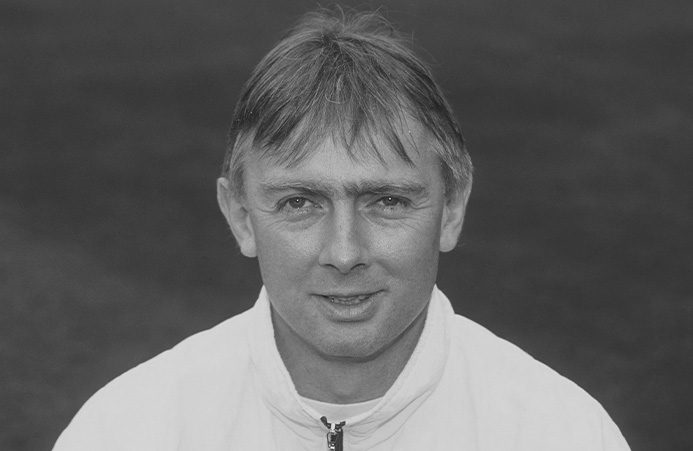
It was just over a decade after the headline event in Tony Pigott’s cricket life – his sole Test for England – that he joined Surrey.
Just past his 36th birthday when he made his County Championship debut, in a 317-run thrashing by Somerset at Bath.
But the man known as “Lester” soon changed minds, scything through Nottinghamshire at Trent Bridge to claim 6-46 in the second innings of a match won by an innings and 231 runs.
And although a season which had started promisingly soon fell apart, Pigott’s 29 Championship wickets at 25 backed the judgement of signing him as an experienced support to younger but injury-prone colleagues.
He would bag another 22 at 30 the following season – when he was awarded his county cap. The toil of being began to catch up with Pigott and his appearances became limited. But, his contributions for Surrey included captaining a side in flux in two Championship matches as he collected 98 wickets in all cricket over the two seasons.
In all there were 672 first-class wickets at 30 of a career which had started for Sussex in 1978, his achievements all the more impressive given he suffered from diabetes, which prompted him to have a supply of chocolate biscuits at the ready for mid-spell sustenance.
His opening first-class wickets came in the spectacular form of a hat-trick against Surrey at Hove, bagging a trio of Test players too as he removed Intikhab Alam, Robin Jackman and Pat Pocock.
A galloping run-up and heave of the shoulders enabled Pigott to bowl at lively pace, although there was plenty of competition for places among the seam attack in his early days at Hove in the shape of Pakistani all-rounder Imran Khan and South African Garth Le Roux plus past and future England internationals in Geoff Arnold and Ian Greig.
Perhaps it should be no surprise that Pigott, an Old Harrovian whose middle names included Shackleton – the explorer was a distant relation – should be one of the more interesting members of England’s one Test wonders club. Playing for Wellington in New Zealand’s 1983-84 domestic season, he was called over to Christchurch as England suffered an injury crisis for the second match of their series.
So late was the summons that Pigott even had to postpone his wedding, due on day four, yet such was the calamitous result that it could still have gone ahead. He claimed 2-75 from 17 overs amid a woeful England bowling display which enabled the Kiwis to make 307, New Zealand then dismissing them for 82 and 93. The weather-interrupted match had been completed in 12 hours of playing time.
Pigott’s final season at The Oval, 1996, was spent as second team coach, following the departure of Graham Dilley. The most notable achievement of that season was rehabilitating Ian Ward, who had been harshly treated in his first spell at the club three years earlier and would go on to make a vital contribution to winning three County Championships in four seasons from 1999-2002.
But Pigott’s stay at The Oval was cut short by a return to Hove, where alongside Robin Marlar he spearheaded what became known as the “deckchair revolution”, Sussex’s members backing their plan to revive a club which had fallen on bad times.
His time as chief executive would only last two years before he headed off on a variety of ventures, some in business plus spells as a pitch inspector and match referee. He fought with typical determination to overcome cancer in recent years and last November detailed his life in a book, Lester and the deckchair revolution.
“Life was never boring with Lester around,” reflected his old Sussex room-mate Greig, later Surrey captain.